
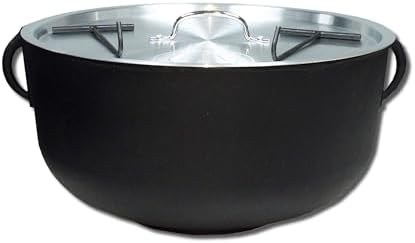
4 Gallon Cast Iron Pot
16 quart flat bottom cast iron pot with aluminum lid for boiling seafood
★★★★½4.4 45 ratings$138.56
The stirred pot
Why jambalaya gets its own pot shape, what cast iron asks of you and how a paddle beats a spoon once the rice goes in.
Boiling gear moves heat into water. Jambalaya moves heat into rice, and rice punishes hot spots. That is why the classic jambalaya pot is cast iron, wide and heavy: the metal soaks up the burner flame and spreads it across the whole bottom, so the layer of rice down there browns instead of scorching in one spot. A thin pot makes the dish before it makes sense.
Iron rusts if you let it sit wet, and it seasons if you treat it right. After each cook, wash it plain, dry it over the still-warm burner and wipe the inside with a thin coat of cooking oil. That film is the finish. Skip the dishwasher and skip the steel wool; both strip in minutes what the pot built up over months.
Once the rice is in, a spoon just draws lines. A paddle turns the whole depth of the pot in one motion, bottom to top, which is what keeps the grains separate and the brown bits distributed. Long handle, flat blade. Stir less often than you want to: every turn releases steam the rice needed.
Jambalaya scales by width more than depth. A tall narrow pot steams the top layer while the bottom overcooks; a wide kettle keeps the rice bed shallow enough to cook evenly. If the crowd doubles, look at a wider pot before a taller one, and expect the stir to become a two-hands job. The lid matters at the end, when the pot comes off the flame and the rice finishes on its own trapped steam.
Off the rack
16 quart flat bottom cast iron pot with aluminum lid for boiling seafood
★★★★½4.4 45 ratings$138.56
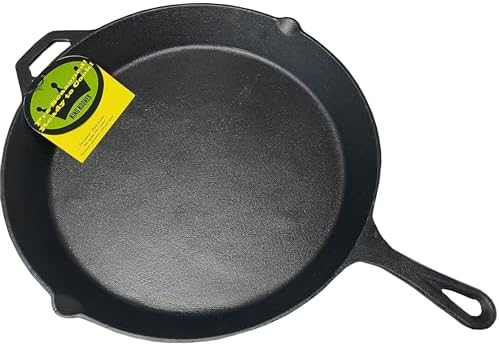
Heavy 20 inch preseasoned cast iron skillet for campfires and outdoor gas cookers
★★★½☆3.7 33 ratings$88.69
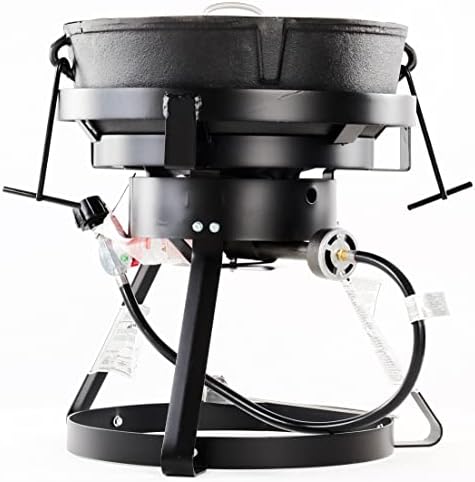
20 quart footed cast iron jambalaya rig built for slow porch cooking
★★★★½4.5 29 ratings$259.77
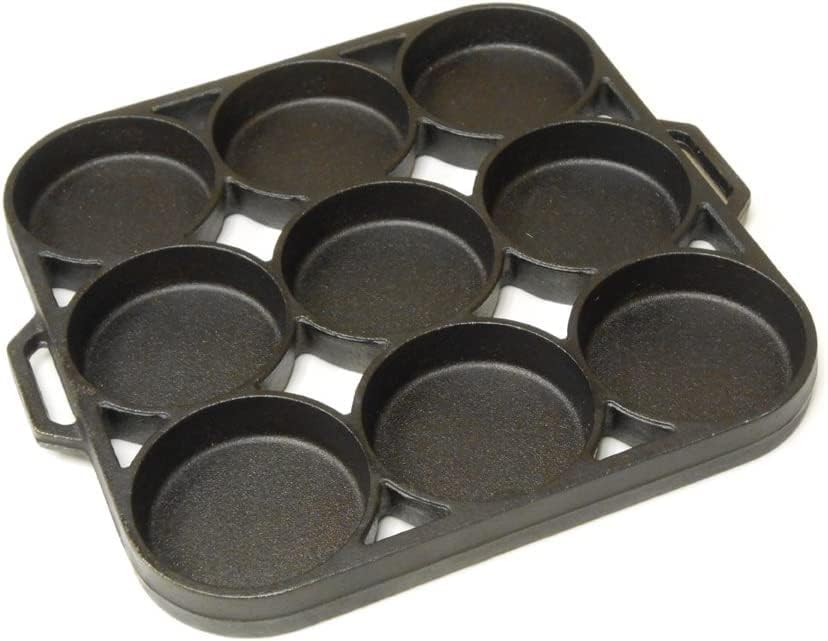
Heavy cast iron biscuit pan with nine individual impressions for outdoor baking
★★★★★4.8 23 ratings$39.99
What the quarts mean. Our rack runs from 8 to 160 quarts, and every number on it maps to a different afternoon. A plain guide to reading pot sizes.
Three questions about the cook, the crowd and the gap in your yard, and the list narrows itself. Answer them here.